
Why We Built a DIY Backyard Sauna (and Why We’d Do It Again)
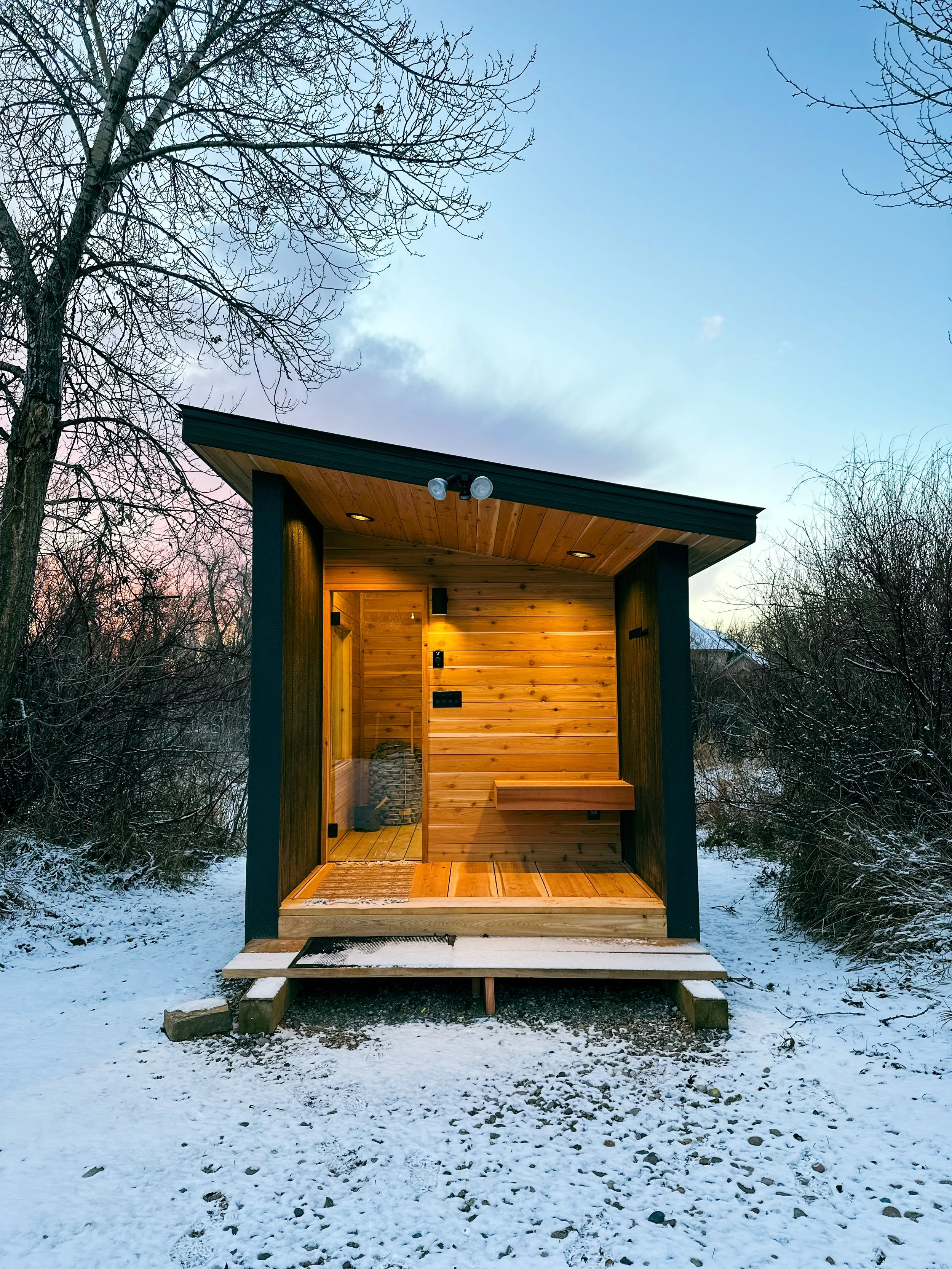
This sauna has been something I’ve wanted for a long time. It started with mental health and overall wellness. Over the last few years, I kept coming back to the idea of having a sauna at home. Add in the growing research around sauna use and long-term health benefits, and eventually it stopped feeling like a “someday” idea and started feeling necessary.
This wasn’t about luxury. It was about building something that supports our health, our nervous systems, and our day-to-day life.
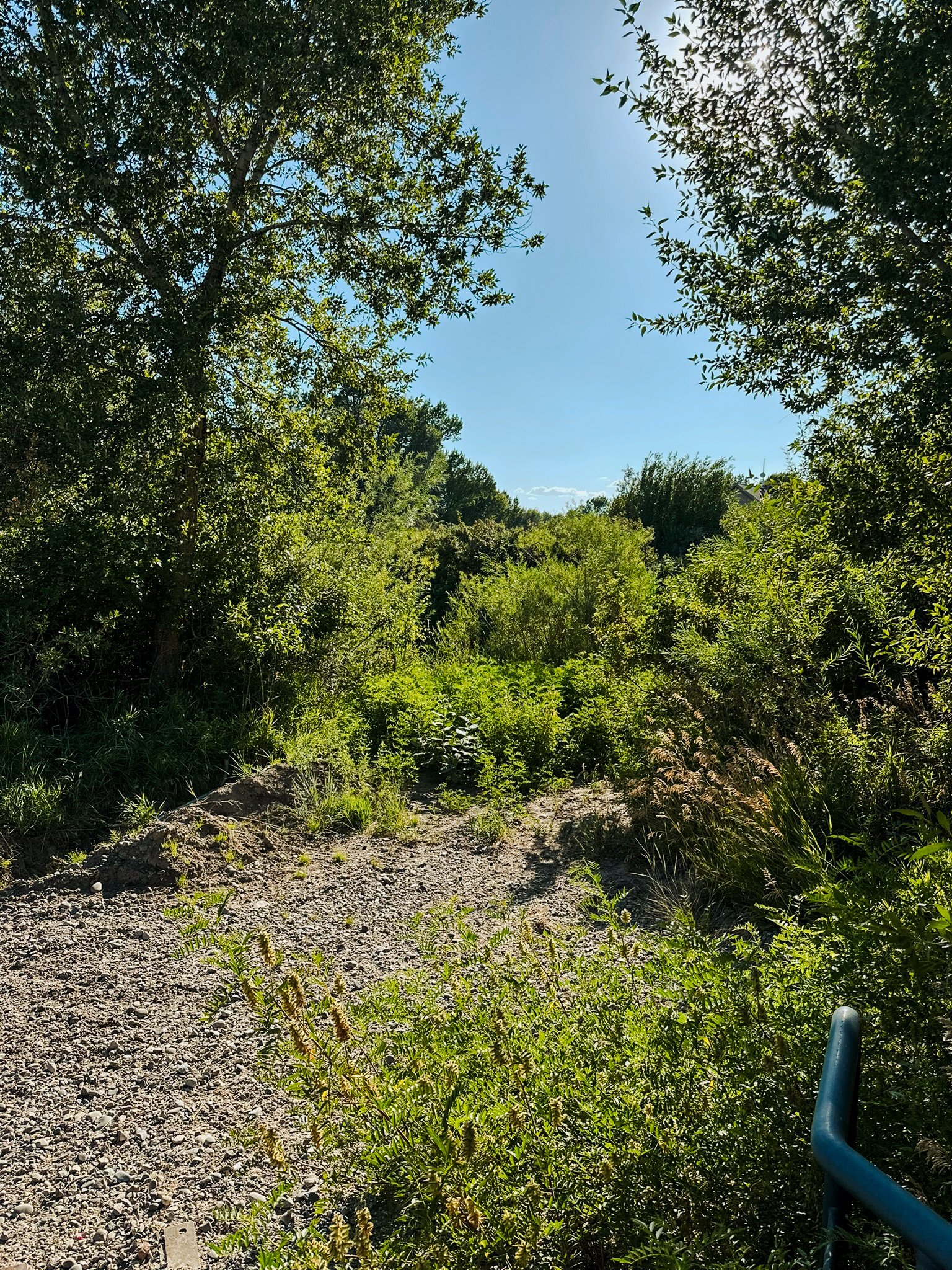
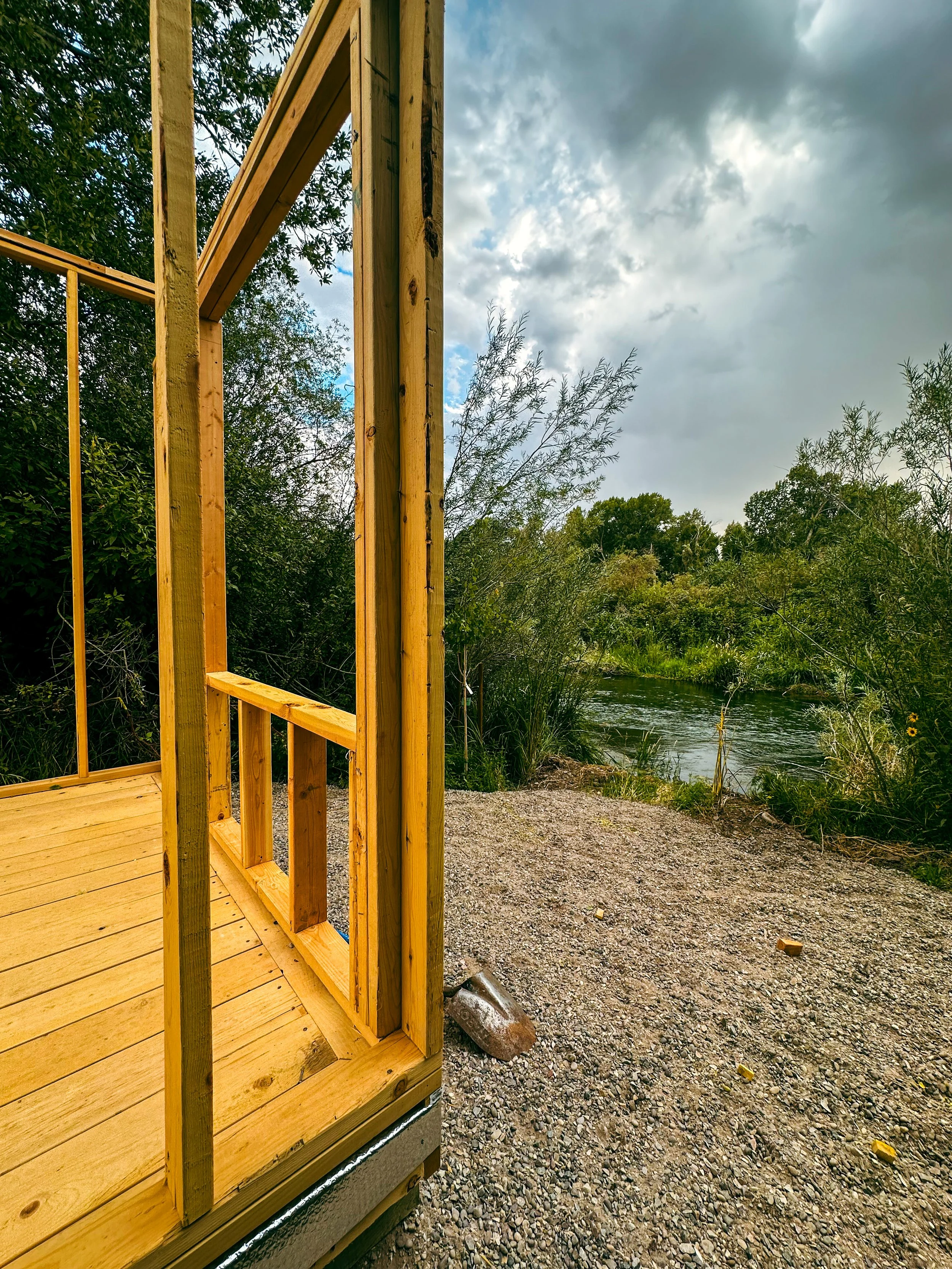
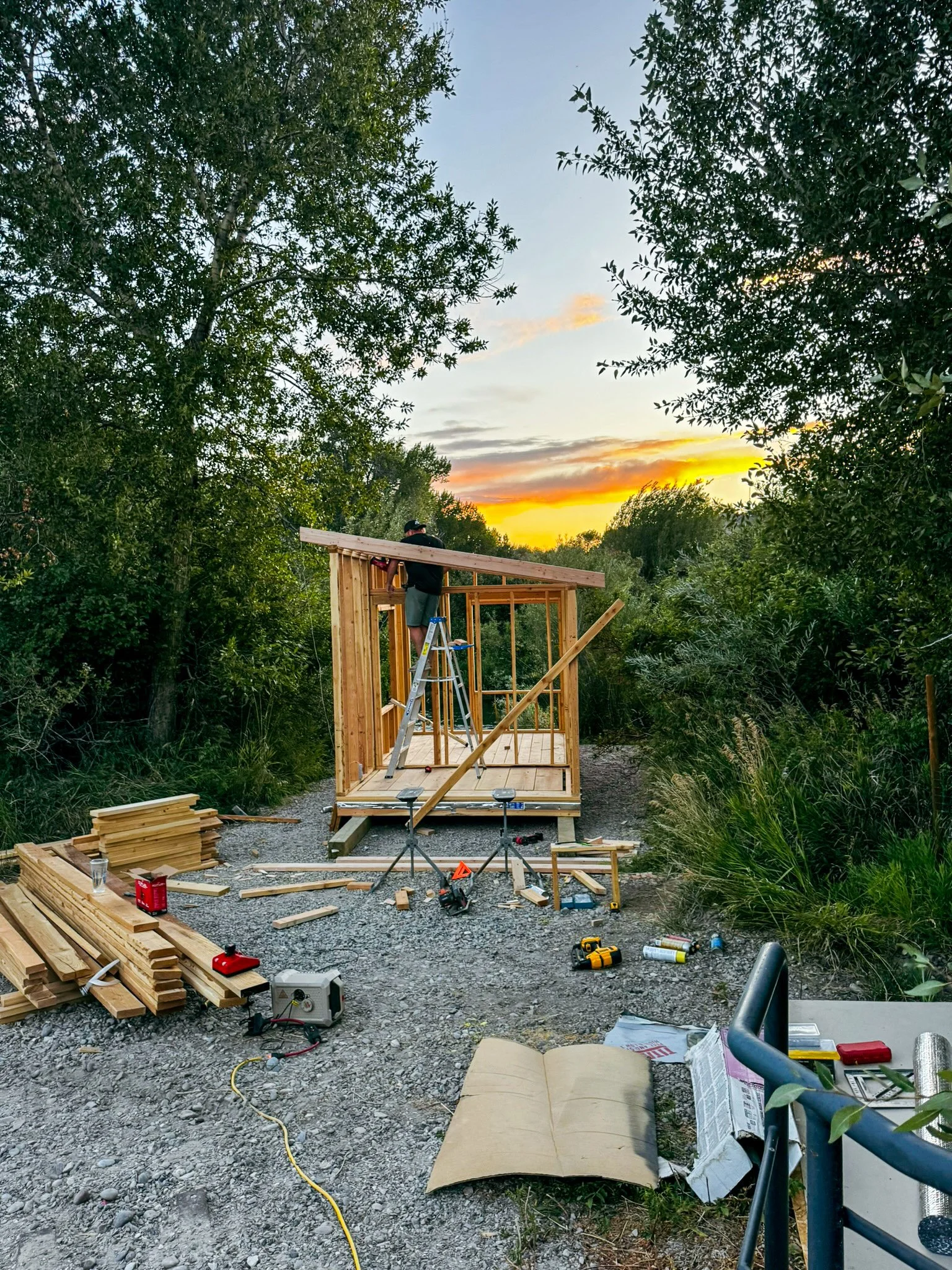
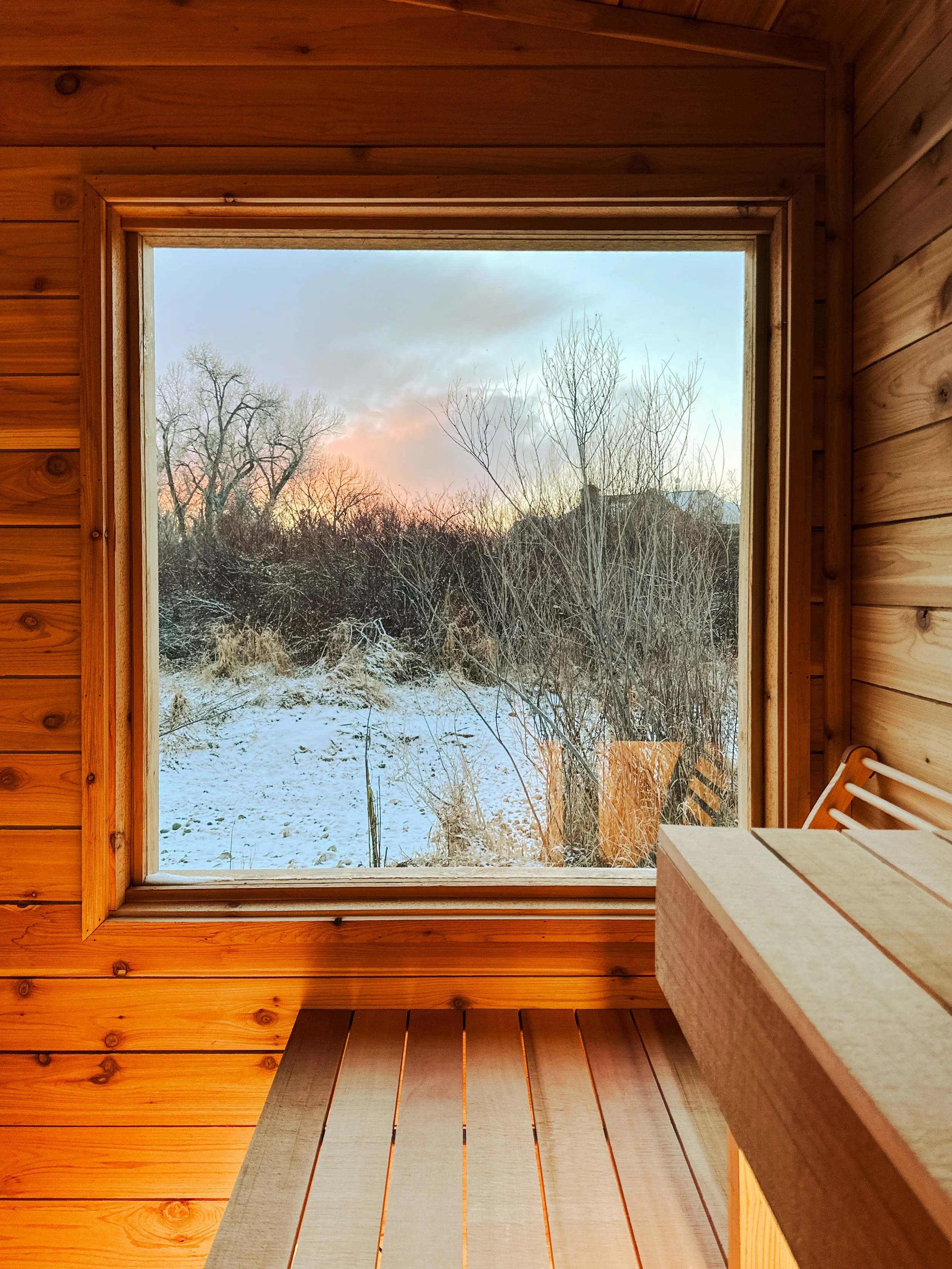
We built the sauna down by the Dry Bed (river) on our property, and that was very intentional. That area is calm and grounding. There’s wildlife that moves through, and when the water is flowing, you can hear it. Even when it’s dry, the space still feels peaceful. I wanted the sauna to feel like a retreat. A place that feels separate from the house and daily noise. Sanctuary vibes were the goal. Being out there instantly shifts your mindset.

Design + Style
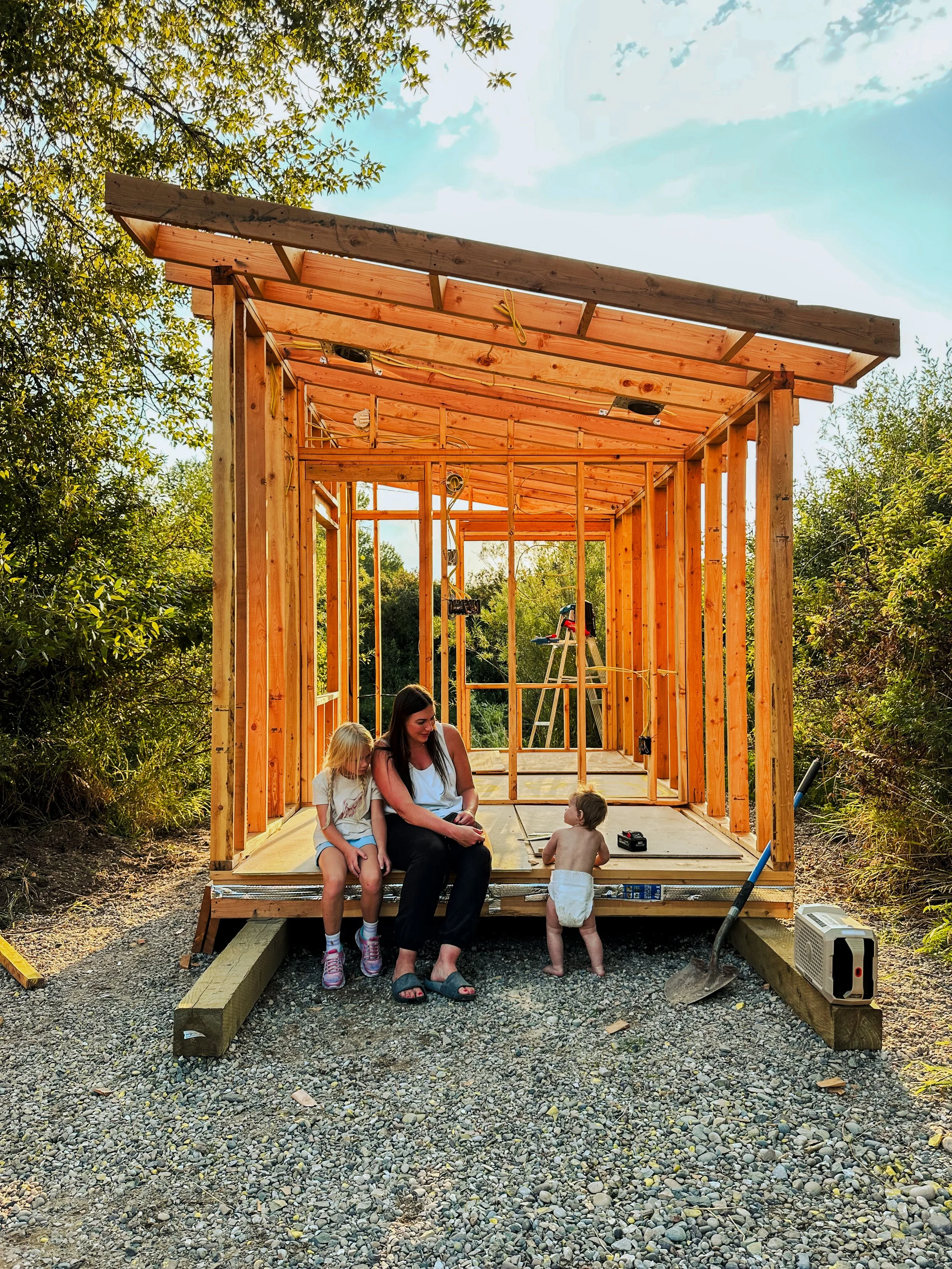
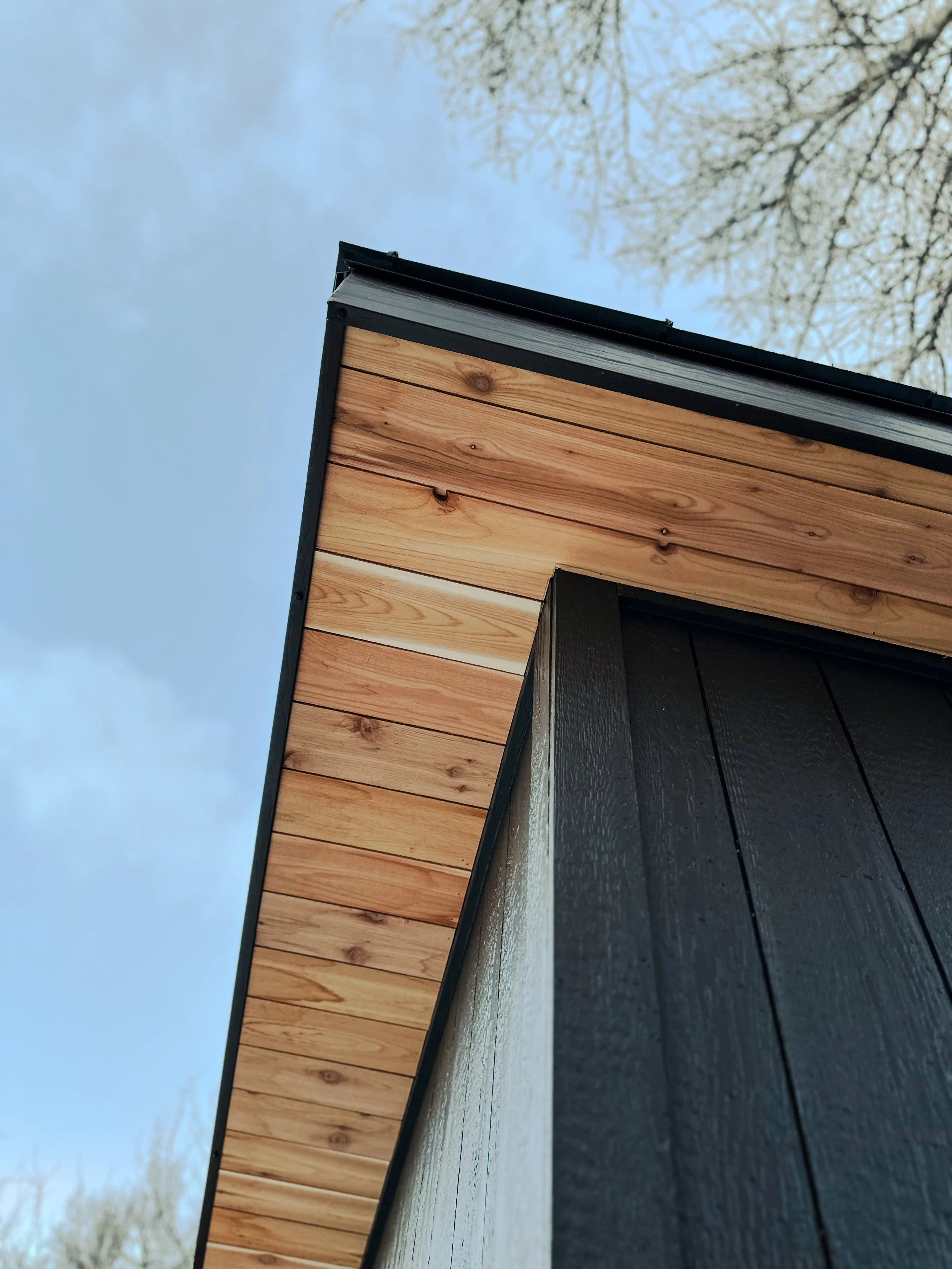
This is an electric dry sauna. It comfortably fits five to six adults, though you could fit more if you wanted. Design-wise, I wanted modern rustic. Clean lines, simple, and something that blends in with the architecture of our shop and existing buildings. I didn’t want it to feel like a random structure dropped in the yard. I wanted it to belong.
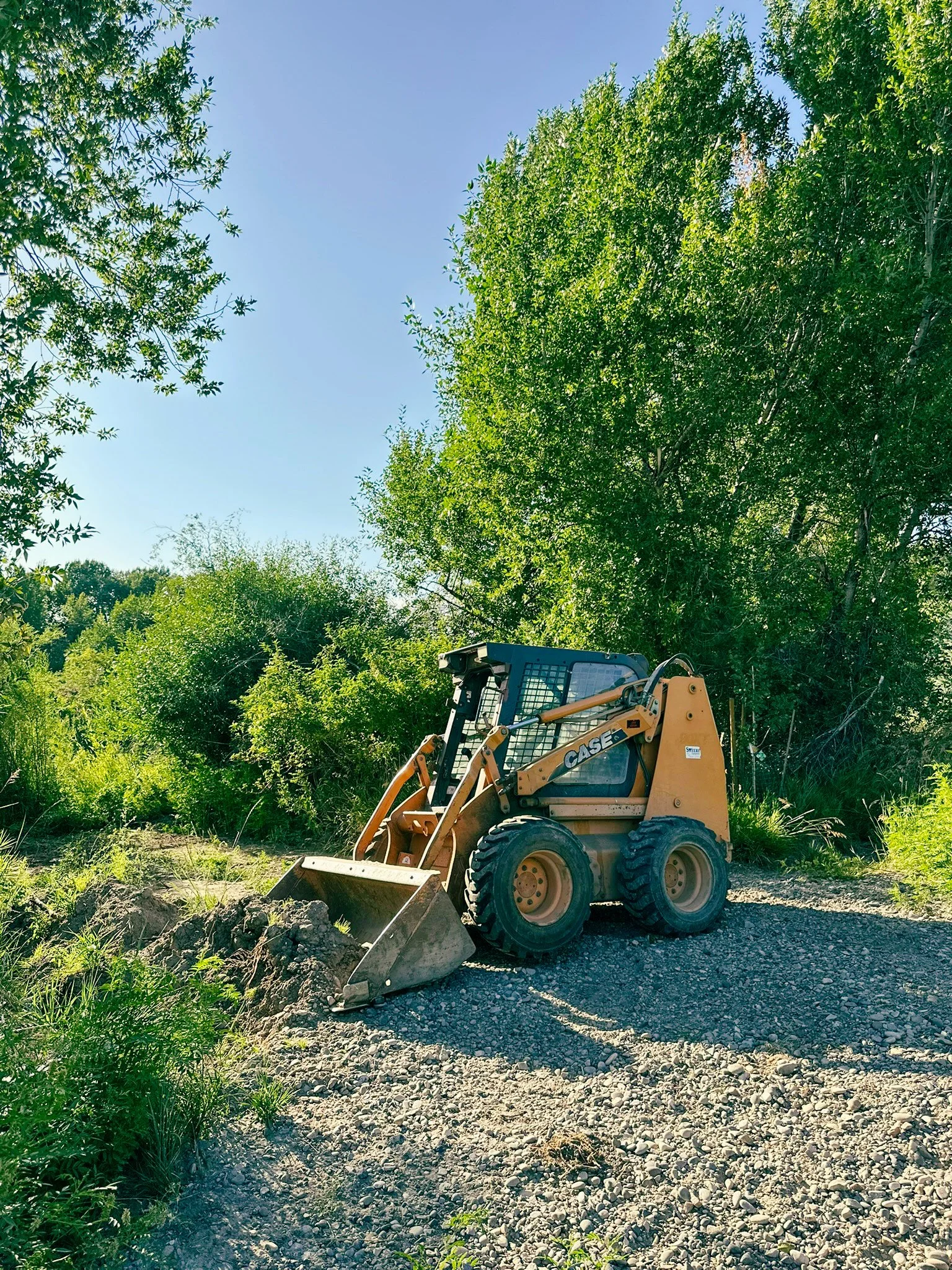
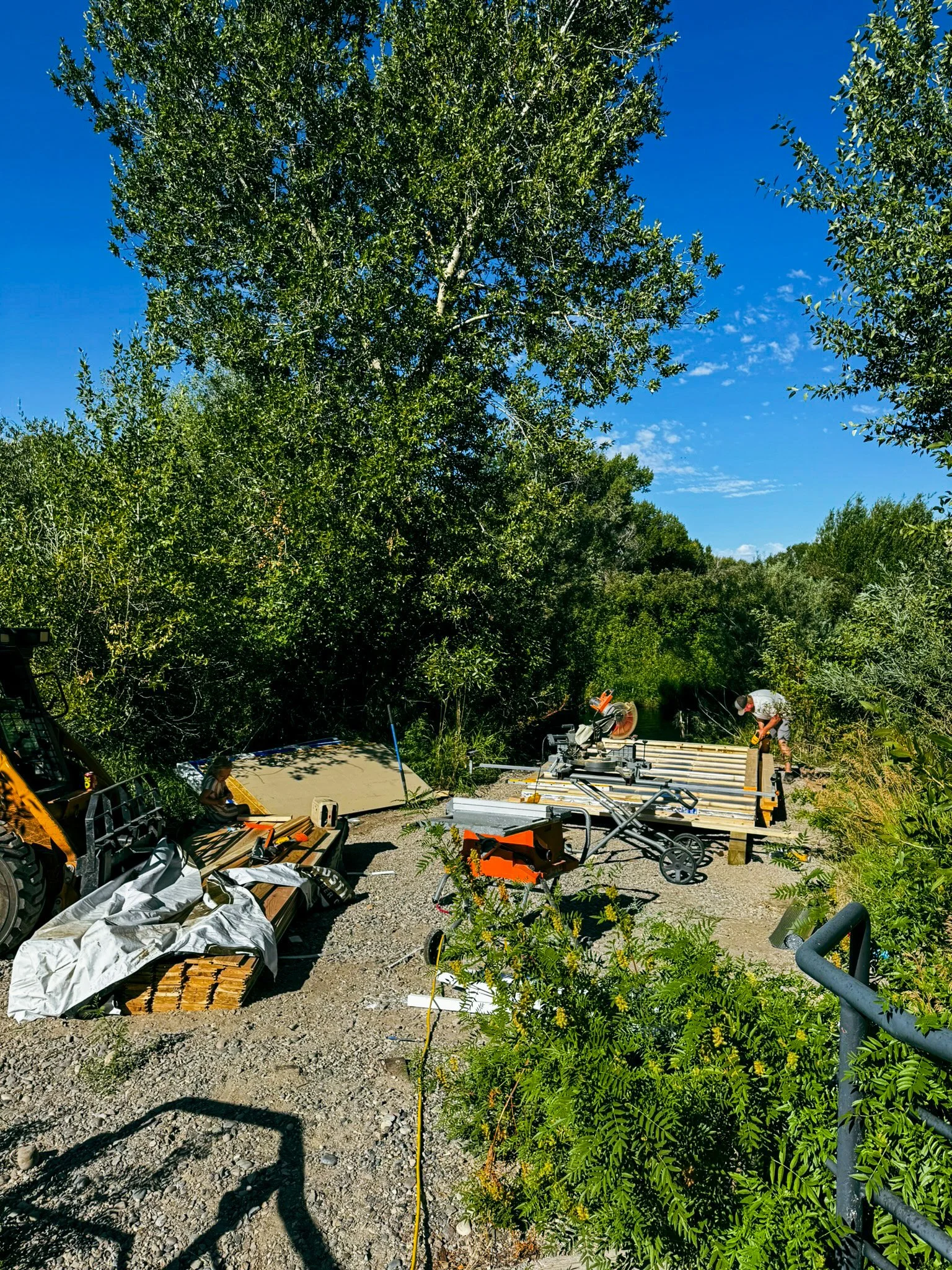
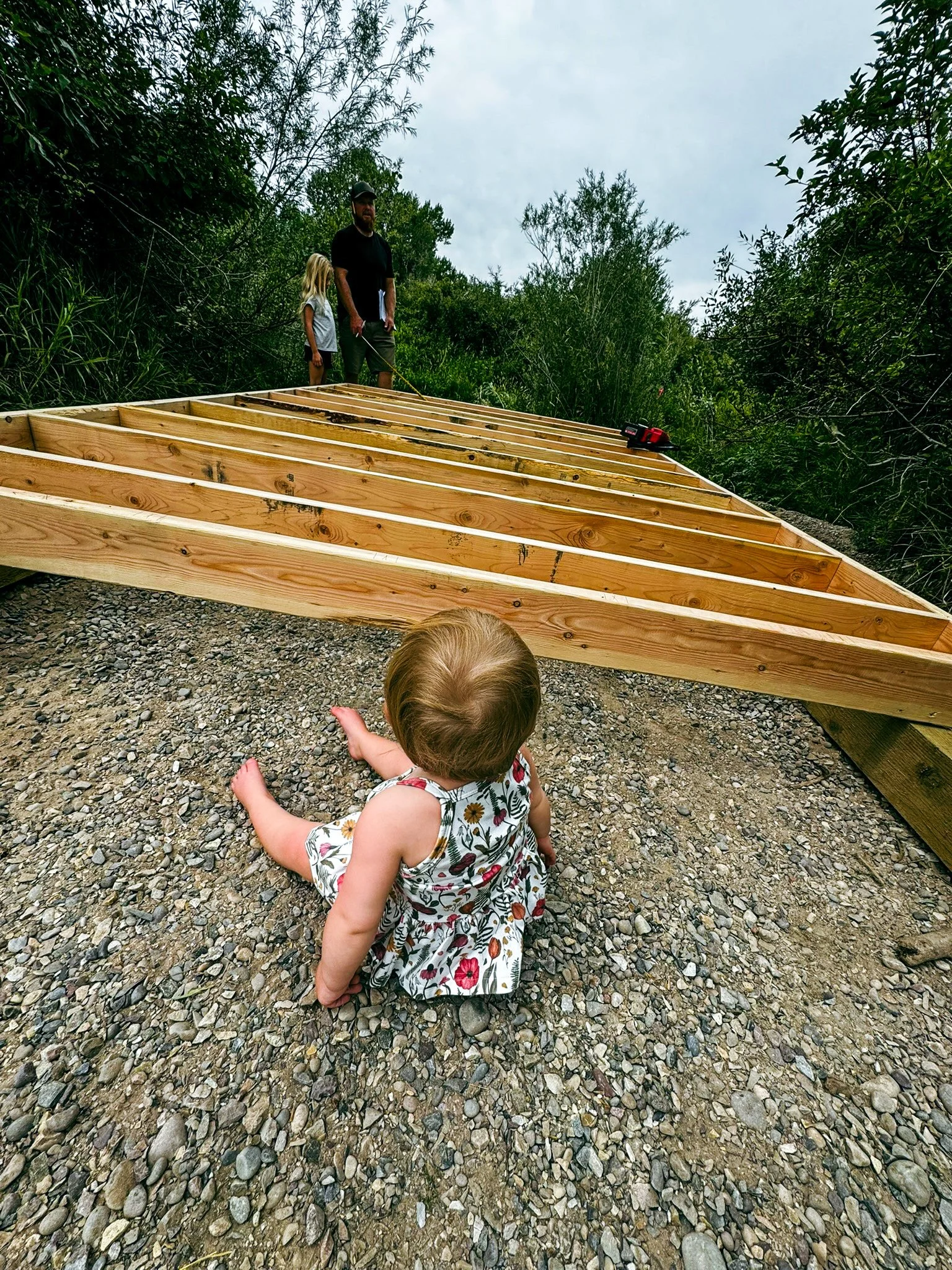
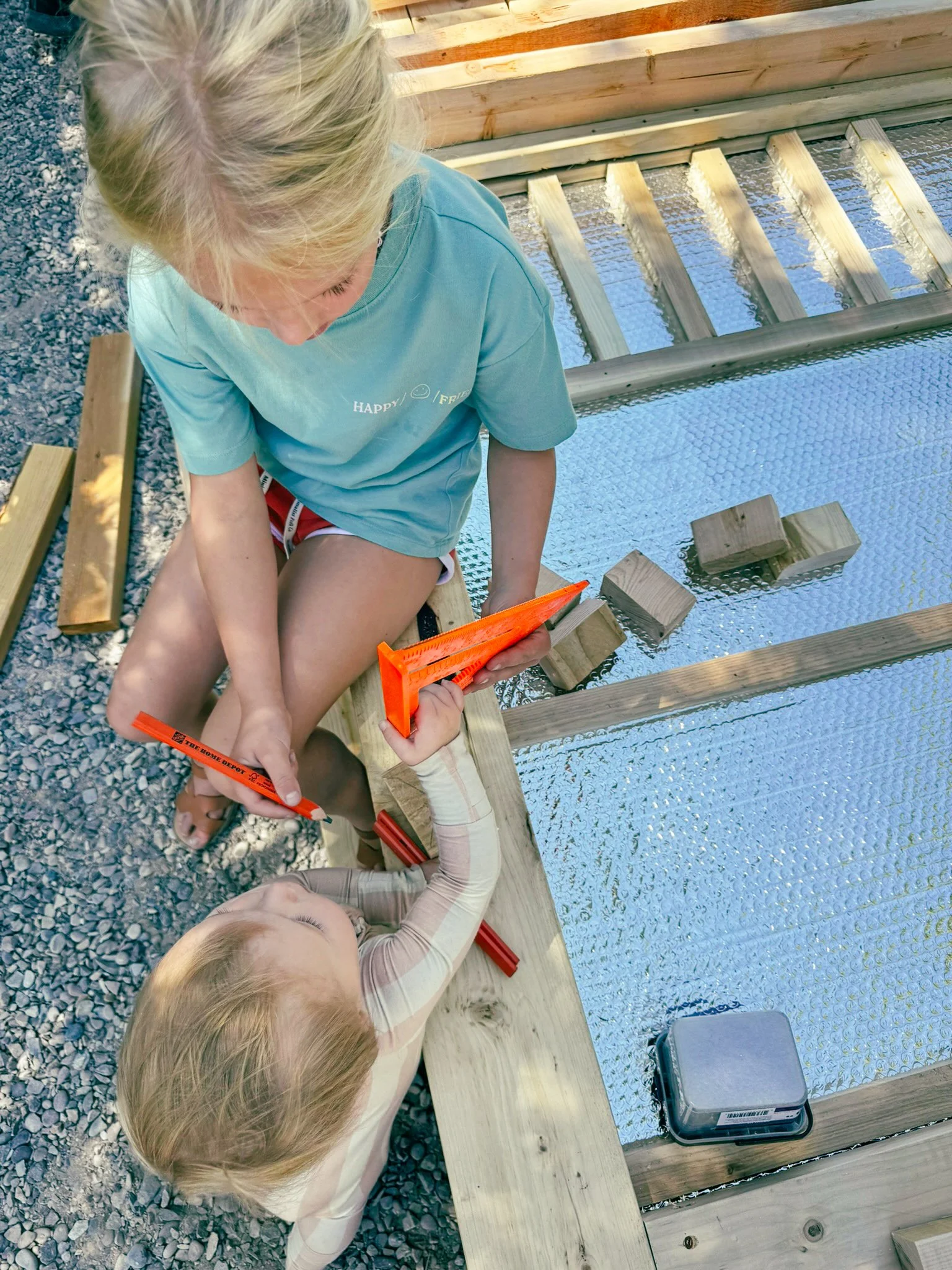
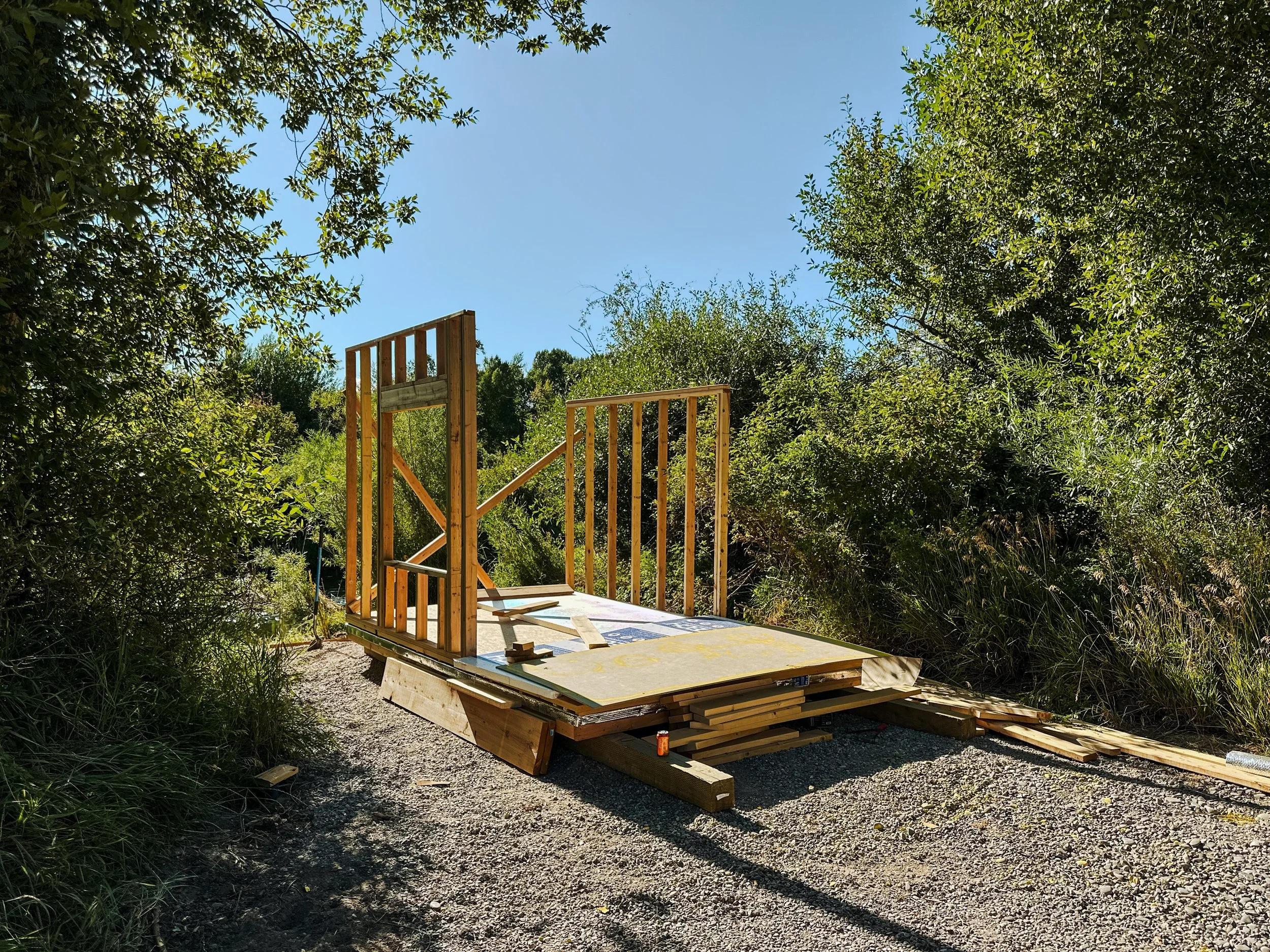
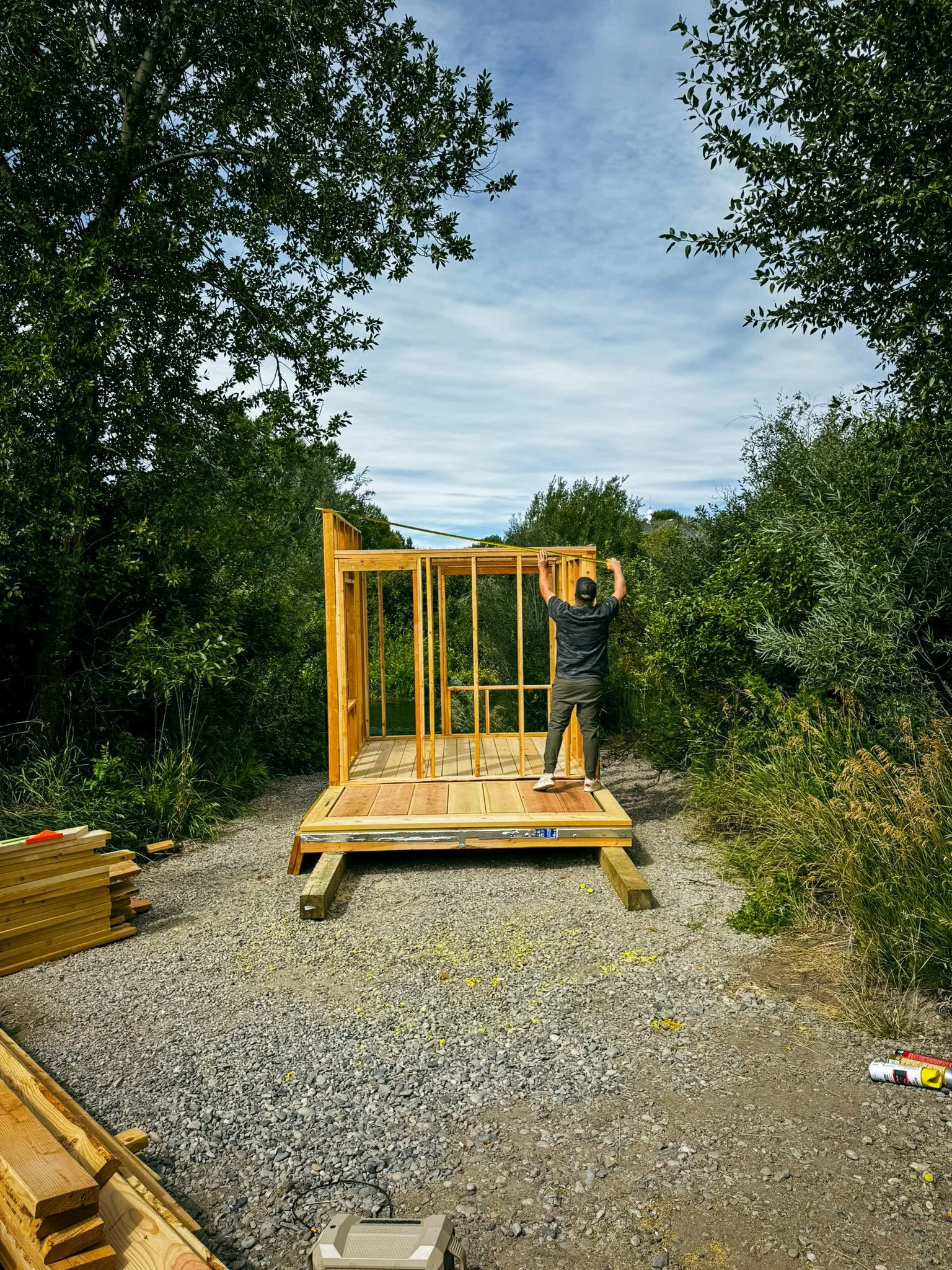
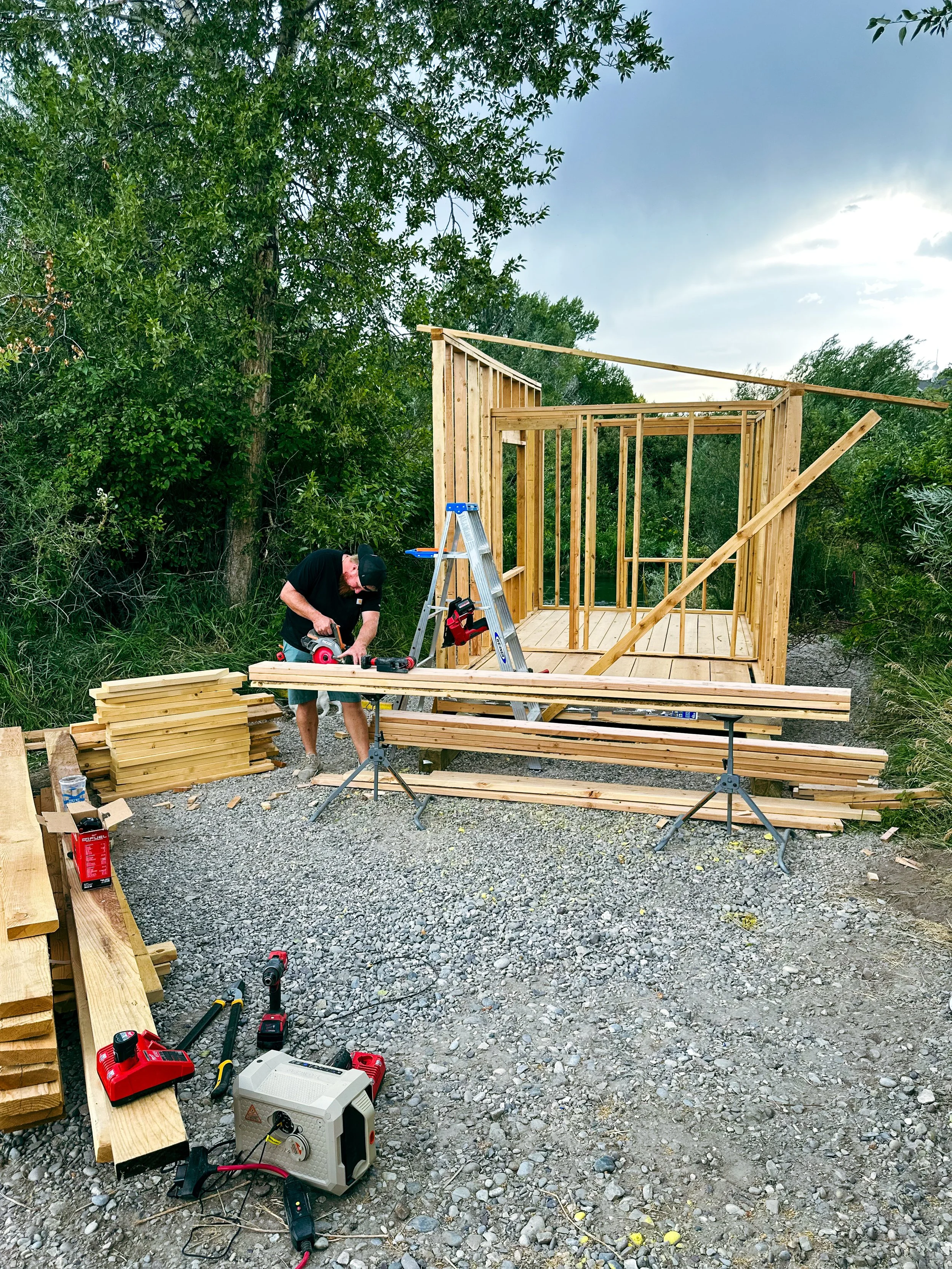
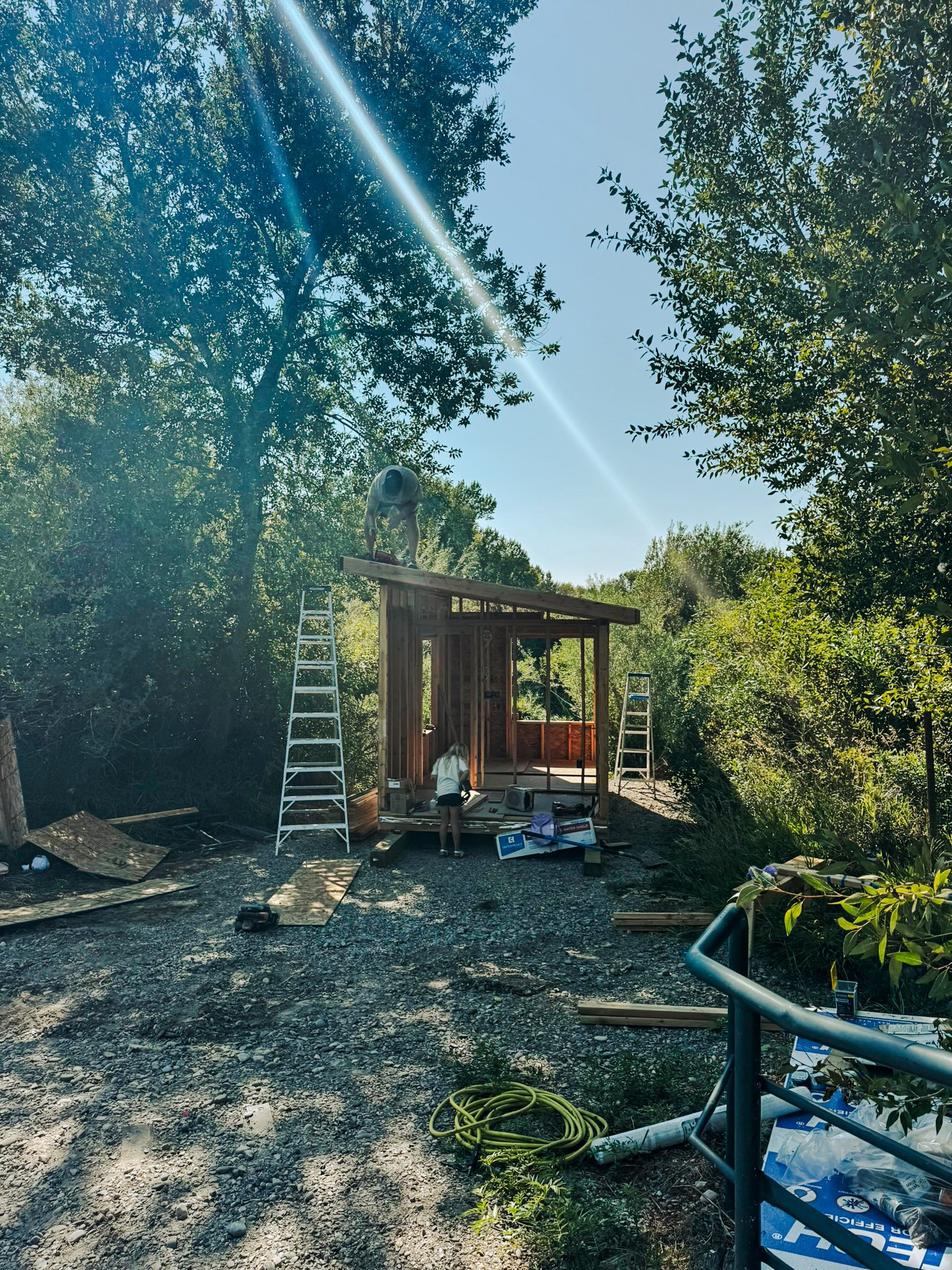
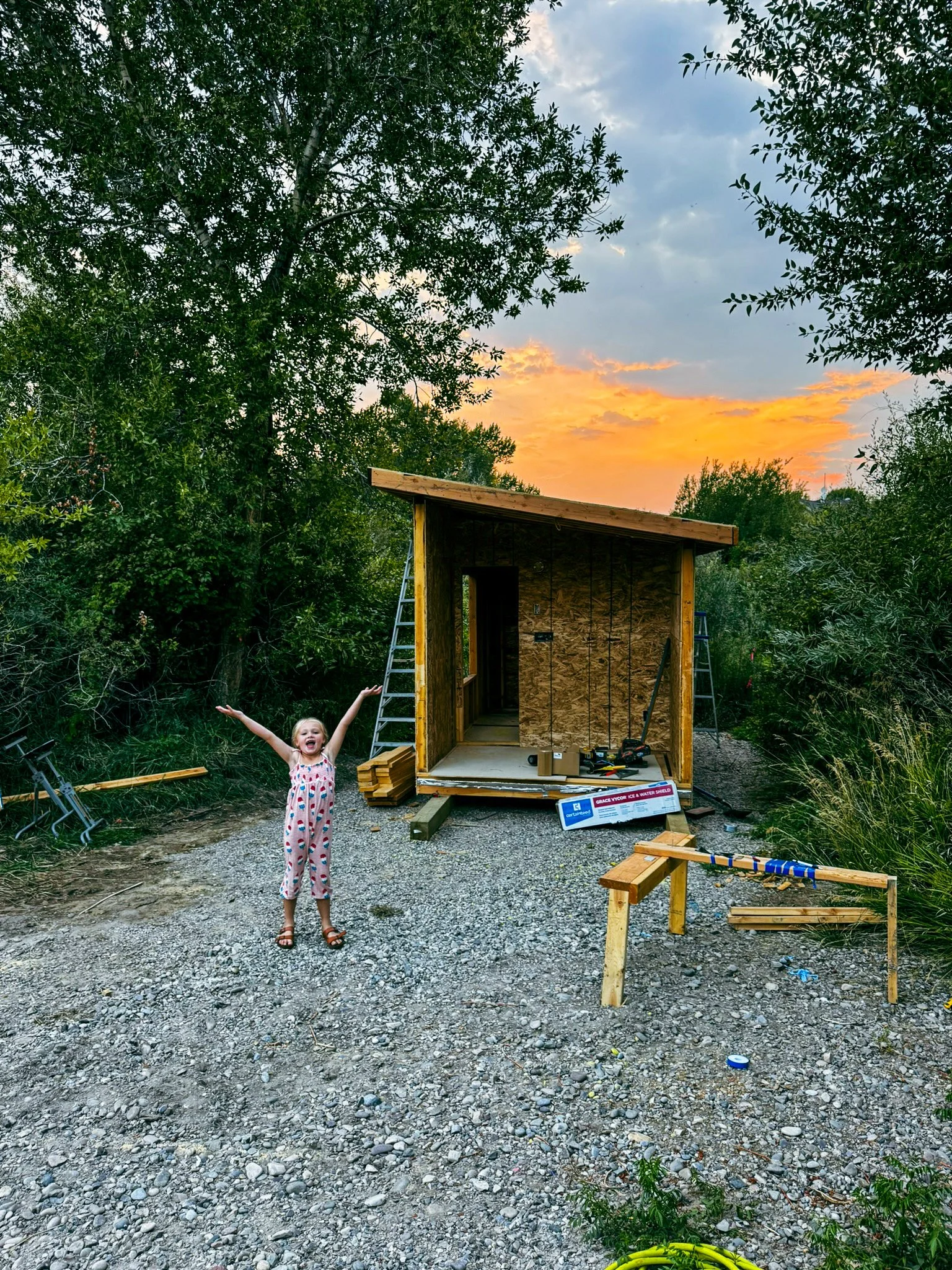
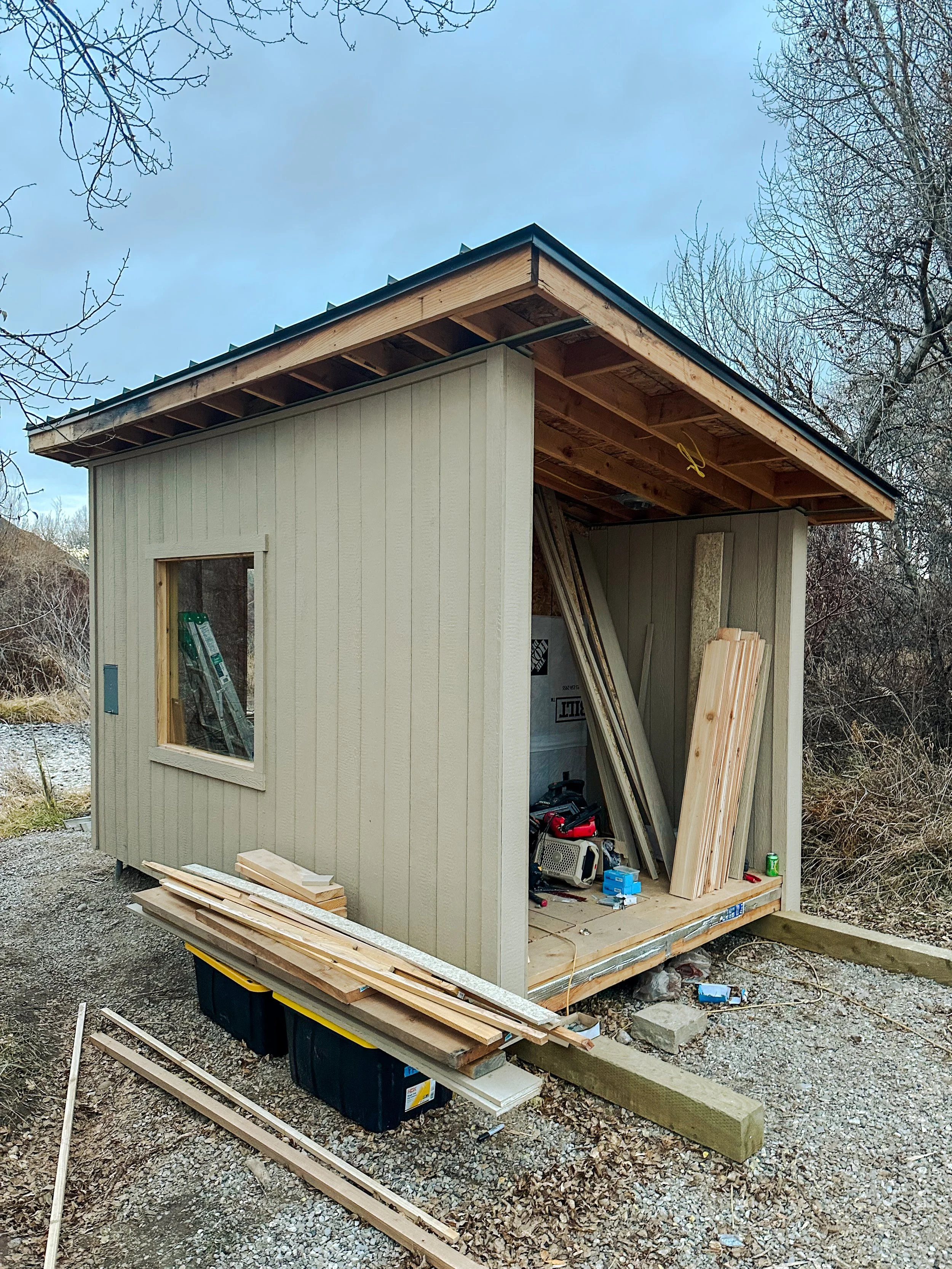
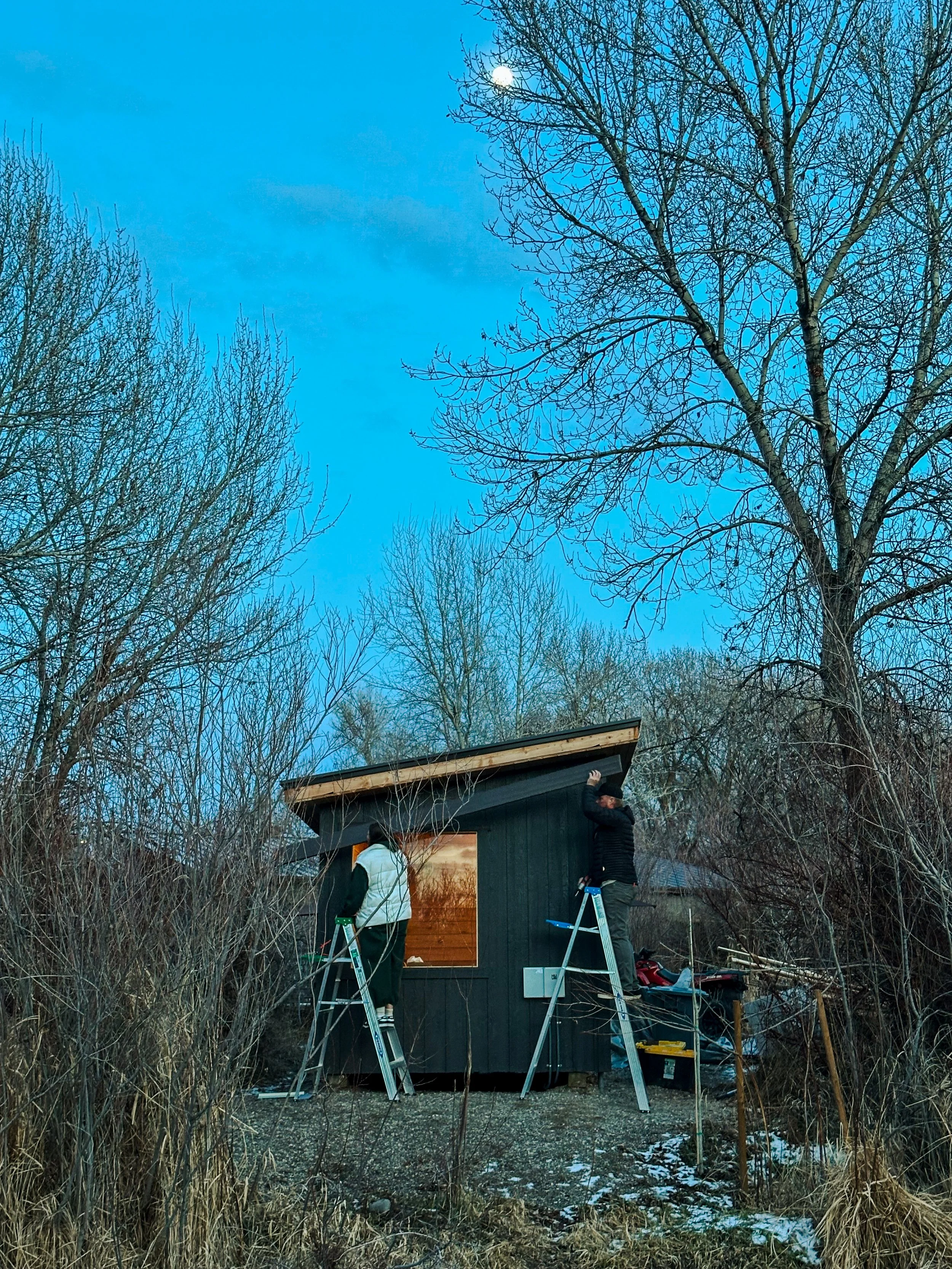
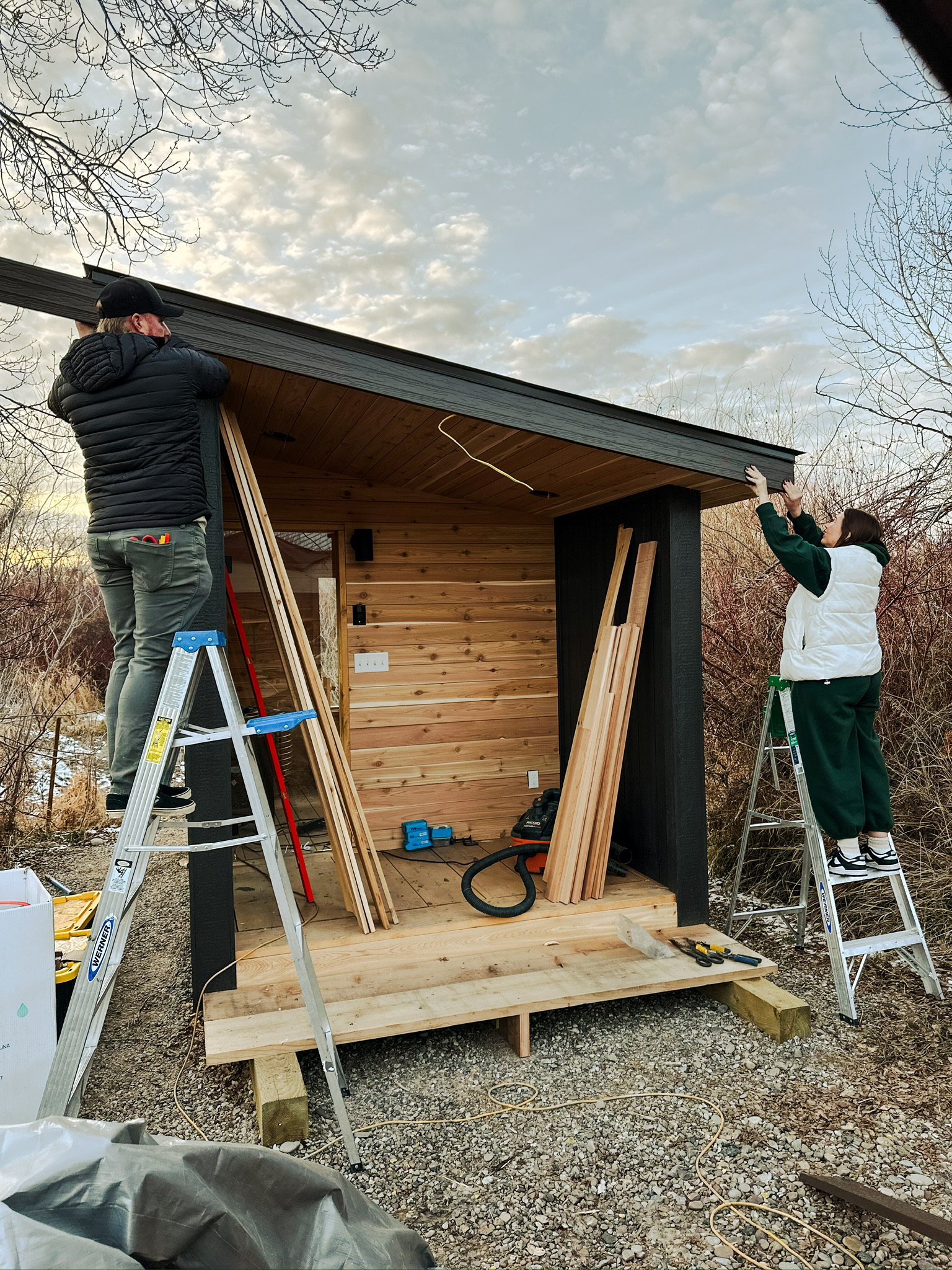
We designed and built the sauna ourselves using online inspiration and a lot of research. Pretty much the only things we didn’t DIY were the heater and having an electrician run the electrical. The build itself didn’t take that long in total hours, but it felt longer because Broc could usually only work on it evenings and weekends and even at that it was usually only a couple hours at a time. This was very much a side project squeezed in between businesses, kids, animals, and real life. Still, it came together surprisingly smoothly.

Things We Learned Along the Way
We definitely learned a few lessons. The biggest one was heater sizing. The first heater we ordered was too large for the amperage available with our current electrical service, so we had to size down. That’s something you really need to look at early in the process. And keep in mind just because the “size” of the unit should technically work on paper it’s important to consult with someone who can tell you if that’s practical or will take 5 hours to heat up. We opted for a happy medium resulting in us not having to run extra power yet still heats up within a reasonable timeframe. Depending on outside temps ours takes about an hour or so.
Highly recommend Michael Mobley @ The Sauna Place. He was awesome to work with and provided great insights. We purchased our heater unit and sauna lights through them.
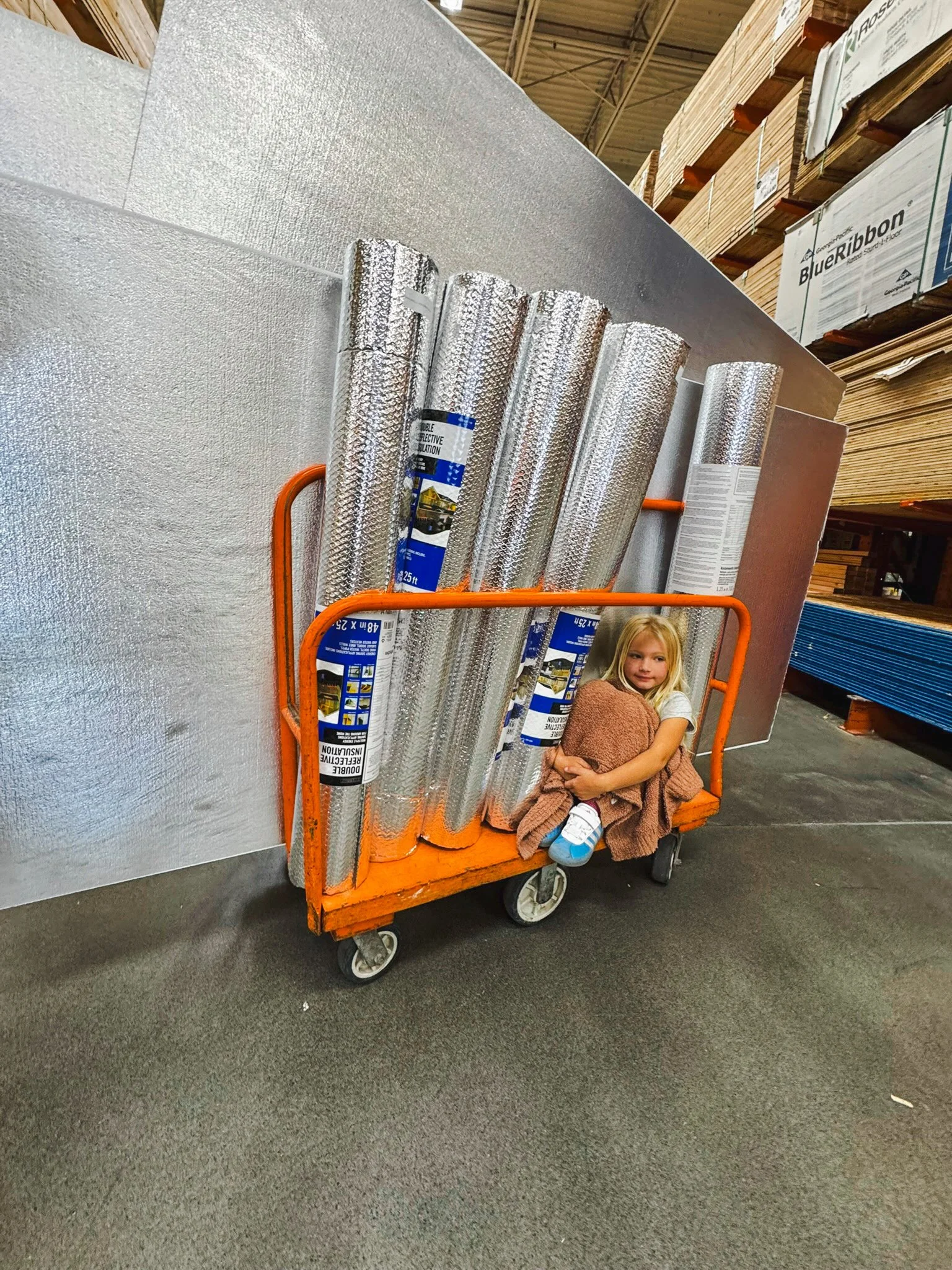
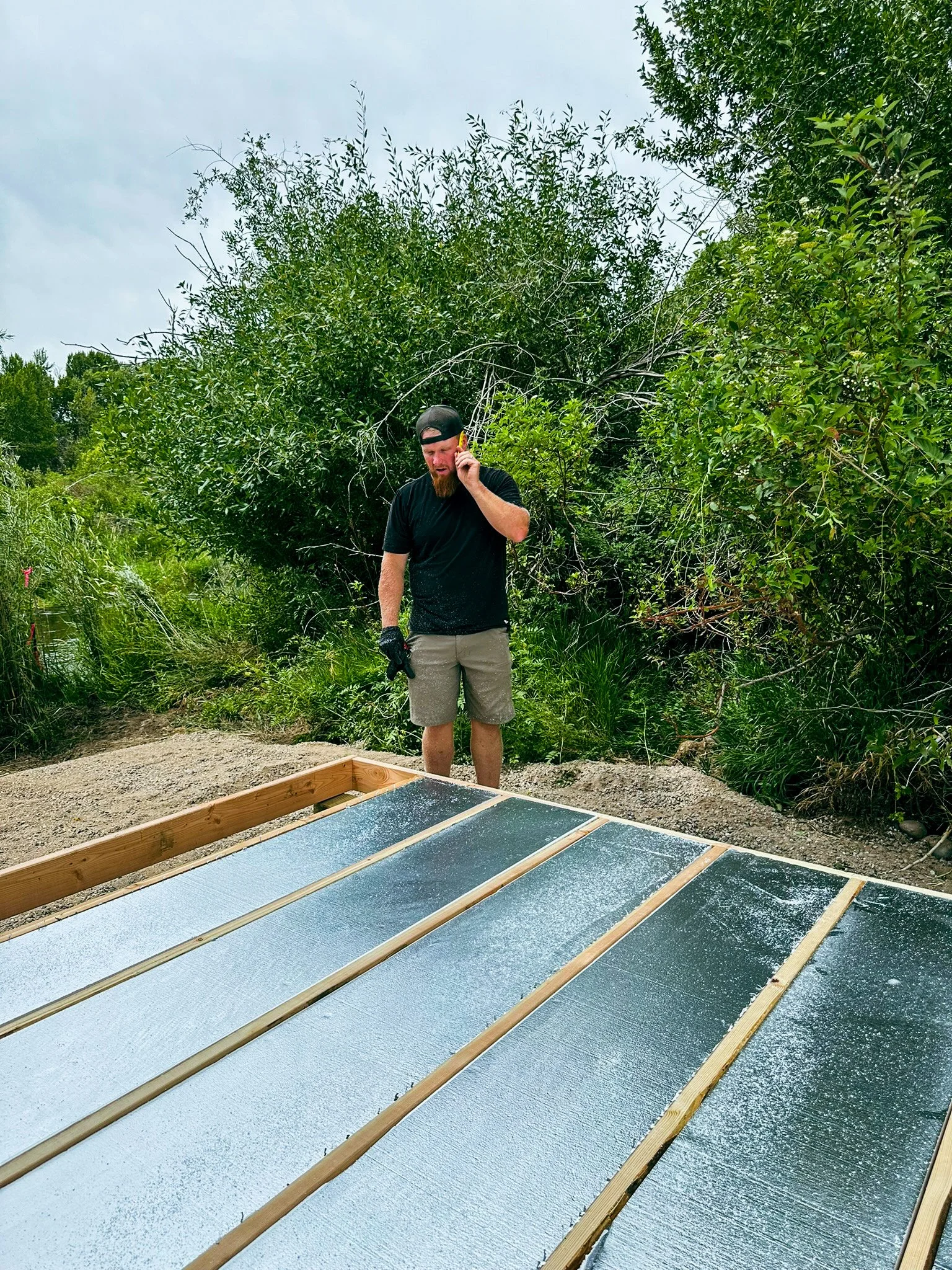
Other important considerations were choosing the right wood, paying attention to knots versus clear boards, installing a proper vapor barrier, and making sure everything inside the sauna was safe for heat and moisture.
Materials We Used
Interior:
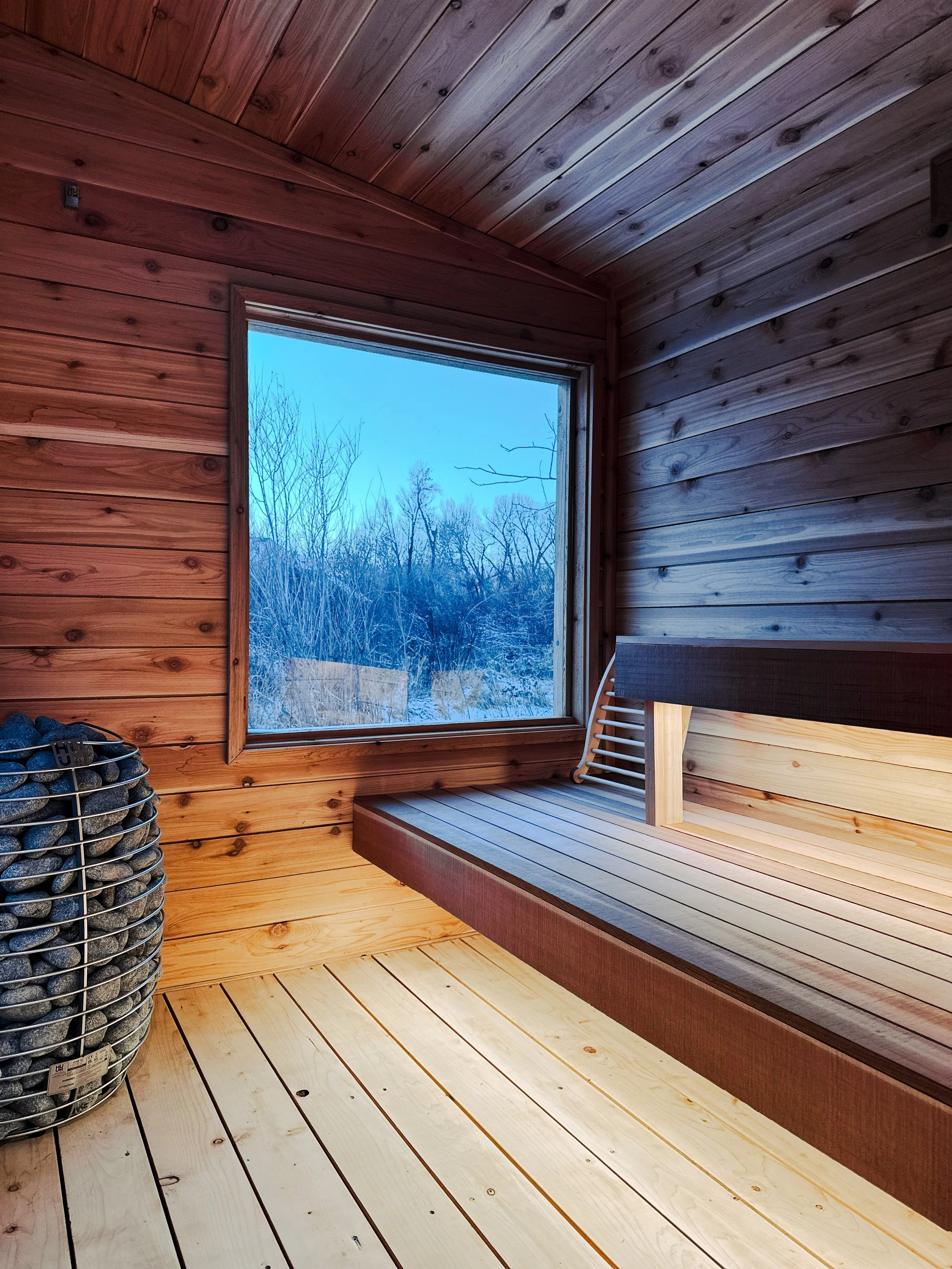
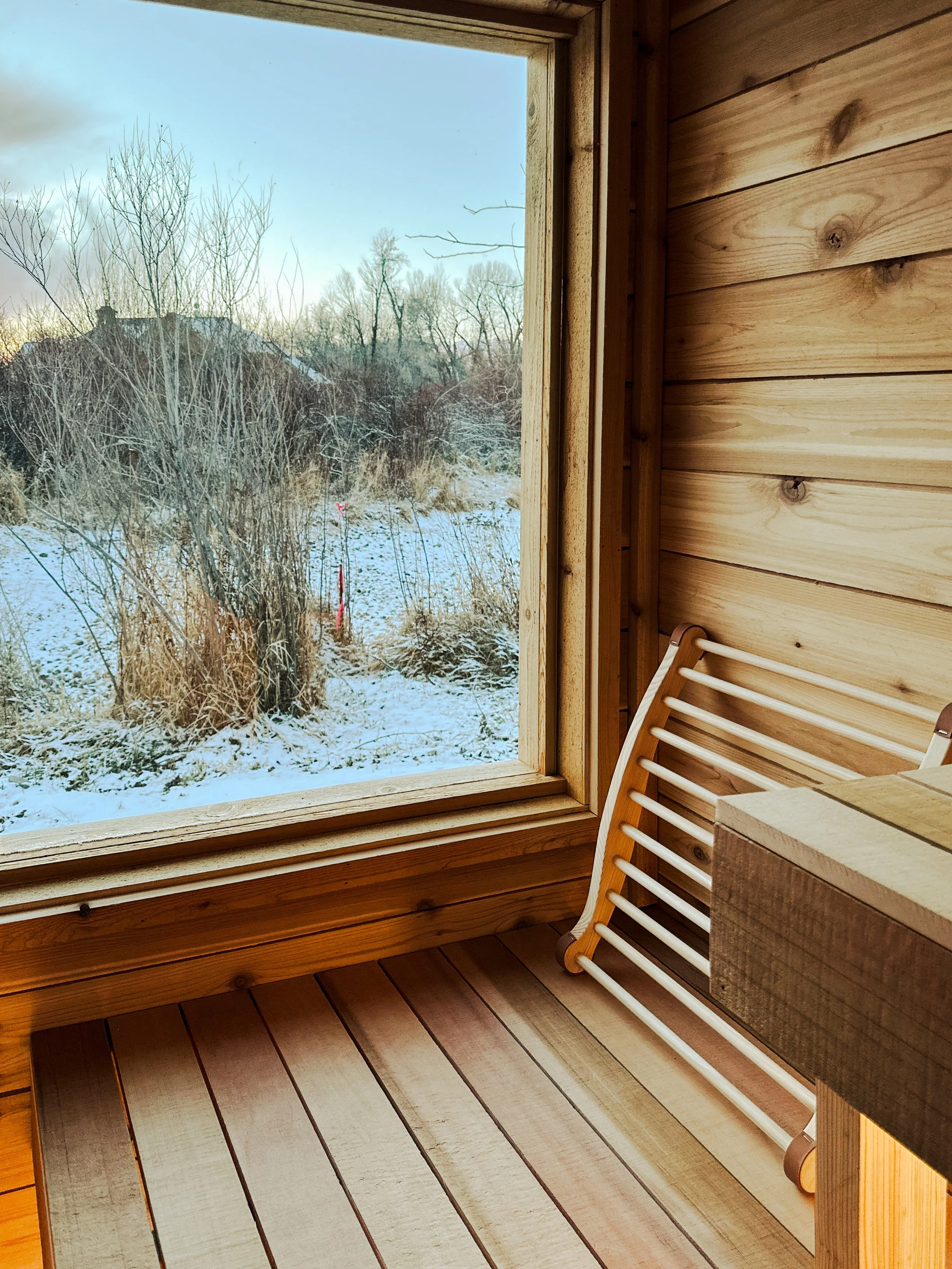
Clear cedar for the benches
Japanese cedar for the floor
Tongue and groove cedar for the walls and ceiling
No treated, sealed, or stained wood inside due to toxins
Exterior:
LP paint-grade siding, primed and painted to match our existing buildings
Insulation:
Mineral rockwool insulation that’s moisture resistant
Foam board insulation for the underside
Heater:
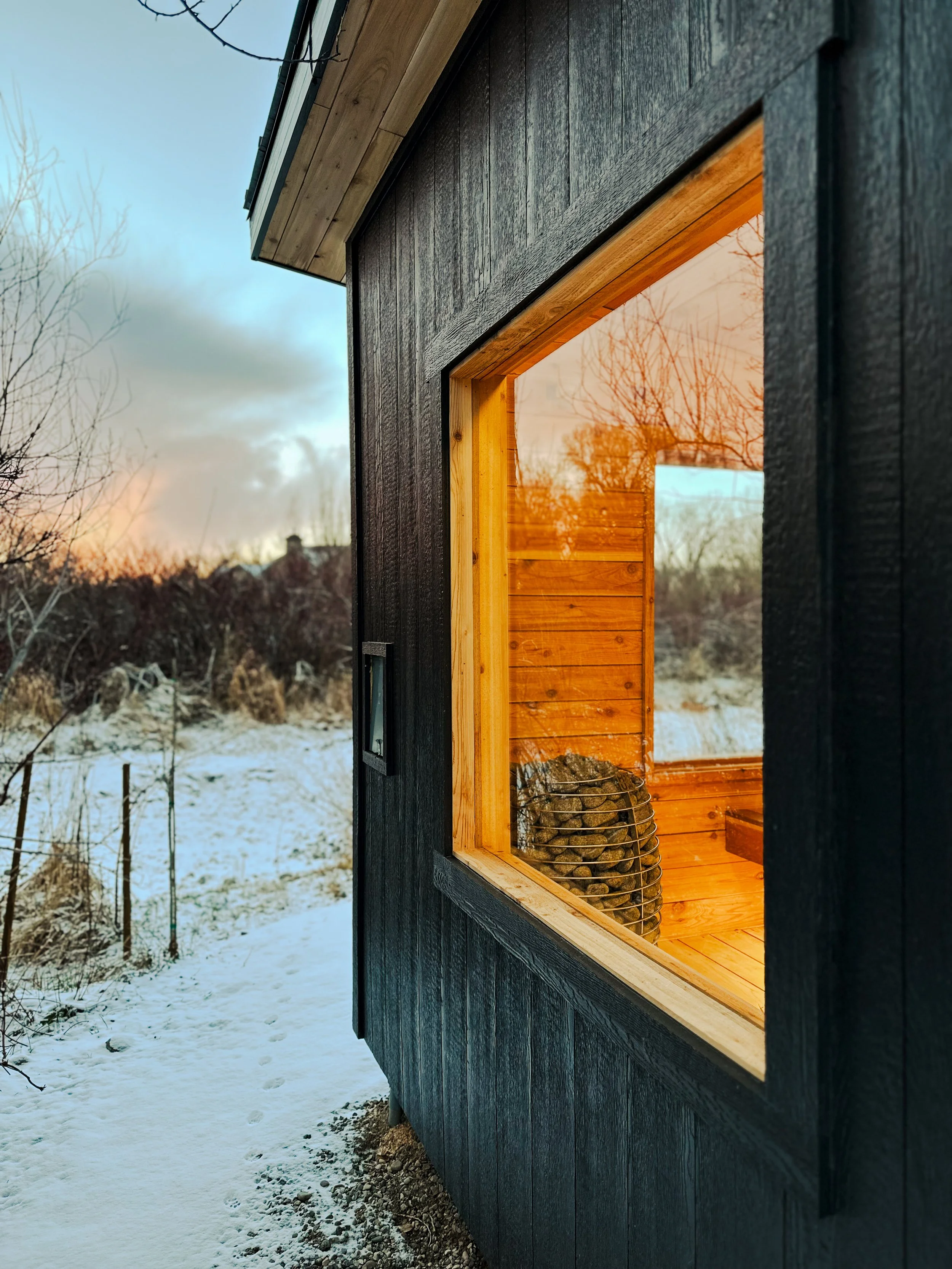
Huum Hive 12kW electric sauna heater
How We Actually Use the Sauna
We use the sauna almost daily, mostly at night.
My sleep has been night and day different since we finished it. The relaxation is immediate. It’s a full woosah moment. Broc agrees. There’s a very real calming effect that’s hard to explain until you experience it. Tinsley is in there all the time and loves it. Because the heater is a large floor unit, we haven’t brought Indie in yet- she’s only 1. That’s just a safety decision for now.
One thing I love is the Huum app. Being able to preheat the sauna from inside the house without having to go outside is a game changer. My family can even have access to schedule their own “appointments” on the calendar so it’s ready to go. If we want to sit in it early morning I can schedule it as well- so nice.
Maintenance has been very minimal. Because we didn’t stain the interior wood, there’s no concern about toxins heating up. At this point, interior maintenance is mostly cosmetic if there are water marks or wear over time. Safety-wise, it’s mostly about awareness, especially with kids, and choosing the right materials from the start.
Would I Change Anything?
The sauna doesn’t have to be as big as it is. A smaller one would heat faster and cost less to build. That said, I don’t regret the size at all. It’s really nice when our whole family is in there, and it feels spacious without being excessive. As you might already know my parents are neighbors and so we all utilize it.
Cost Breakdown
Yes… this was an investment and honestly I was a little scared to add it all up if i’m being honest. Overall we spent about $17,550 total.. I’m sure there were miscellaneous expenses that we haven’t calculated and obviously this doesn’t include our time. However, based on the final product, we probably built a $30,000 sauna for almost half the cost by doing the construction ourselves. To me it’s an investment in our health and well-being and this sauna isn’t going anywhere soon- I hope our kids and grandkids can enjoy this and chat about how badass their “grandpa” was building this thing. 😂
Here’s the full breakdown:
Huum Hive heater: $2,900
Electrician: $900
Cedar: $2,800
Paint: $300
Glass: $1,500
Lumber: $500
Control system: $1,300
Extension box: $2,500
Stones: $1,000
LED lighting: $500
Roof: $750
LP siding: $1,800
Insulation: $800
Total: $17,550
I’d only recommend DIYing a sauna if you’re comfortable building. If you are, there are so many resources out there, and YouTube can teach you a lot.
For us, this sauna has become part of our daily rhythm. A place to slow down, reset, and take care of ourselves. It’s not about perfection. It’s about building a life that feels grounded and sustainable.
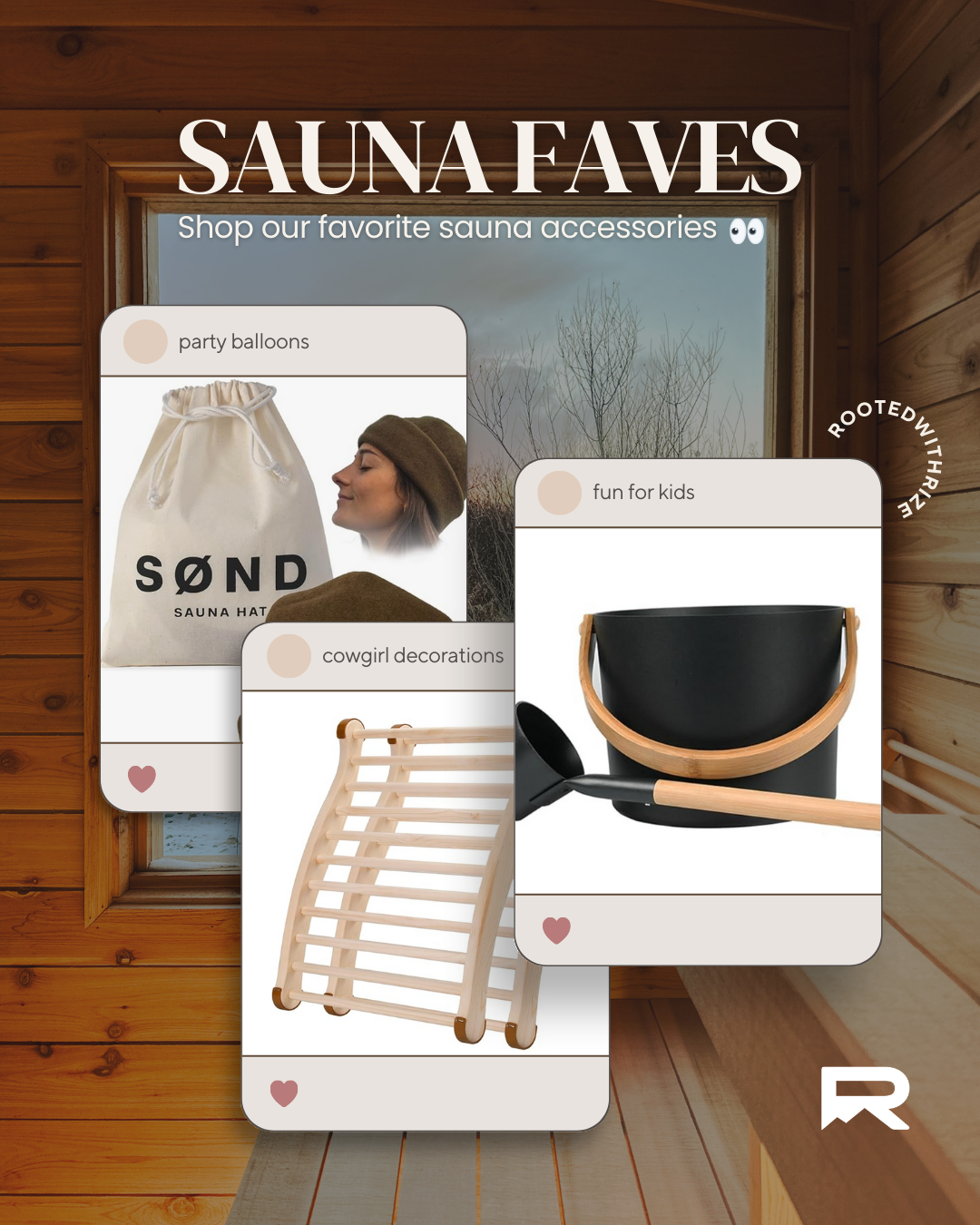
Affiliate links included. As an Amazon Associate, we earn from qualifying purchases.